Assistive Computer Vision
I am interested in perception systems that support blind and low-vision users in everyday environments. This includes pedestrian navigation, scene understanding, and reliable risk cues.
AI Researcher and Software Engineer
AI researcher and software engineer pursuing an MS in Data Science and Engineering at The City College of New York. Former intern at The New York Times, with work spanning computer vision, assistive technology, and privacy-aware AI.
Research
I am interested in perception systems that support blind and low-vision users in everyday environments. This includes pedestrian navigation, scene understanding, and reliable risk cues.
My work explores how models can detect and localize private or sensitive information in everyday images. The goal is responsible multimodal AI that helps users understand what visual data may reveal.
I study vision-language systems, open-vocabulary detection, grounding, segmentation, and verification. I care especially about how these models behave outside clean benchmark settings.
I like projects that connect civic data, transportation, environmental systems, and public services. The strongest AI systems should make city life more understandable and humane.
Research
Research, reports, and presentation concepts that document work as it develops.
A technical report on combining segmentation, object detection, tracking, and structured risk logic to support safer pedestrian navigation for blind and low-vision users.
View contextA forecasting study that combines TSA passenger volumes, flight operations, weather, and calendar patterns to predict JFK Airport congestion and support operational planning.
View contextFormal publications will be added as the research progresses.
Projects
A focused set of research, computer vision, civic technology, and data science projects.
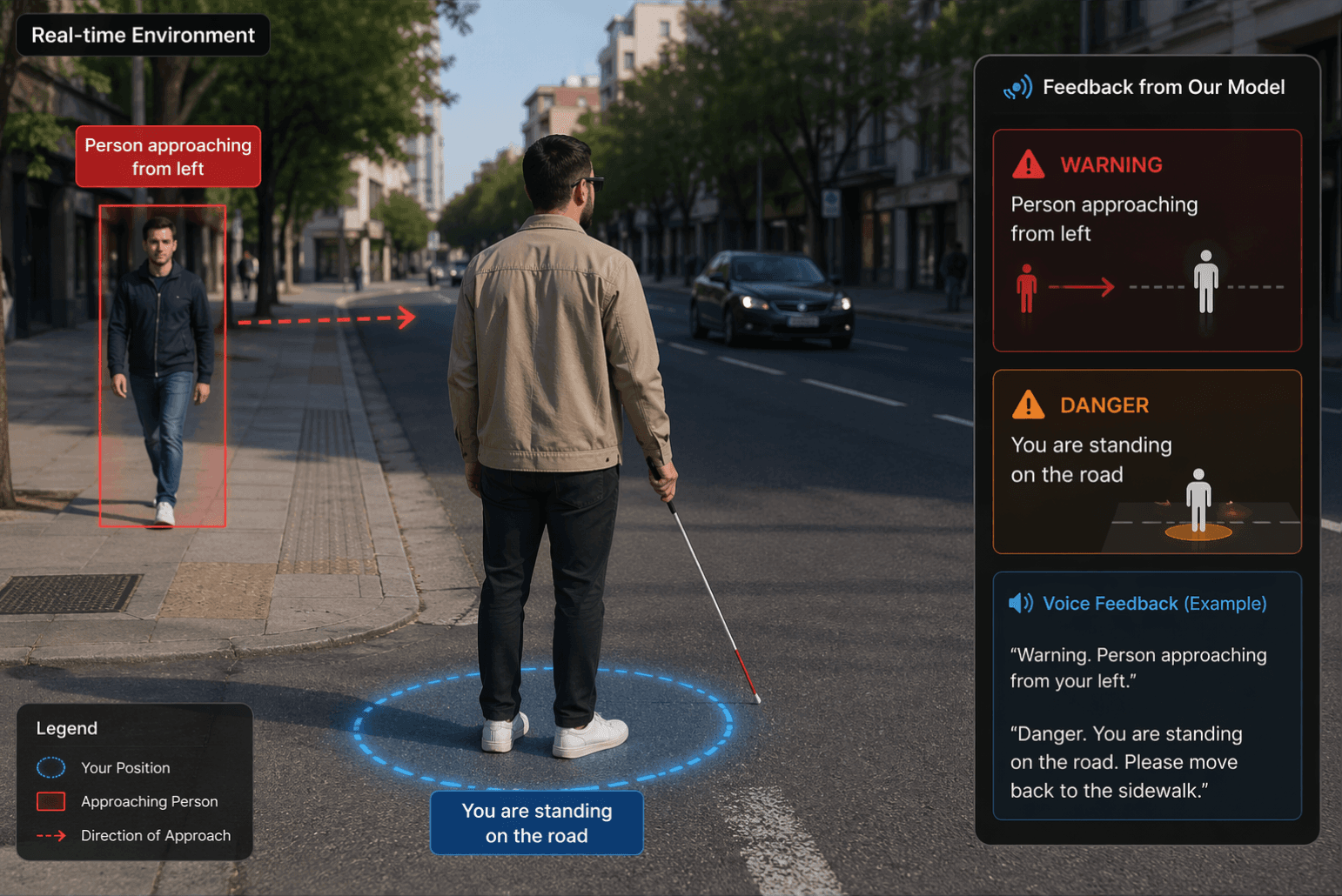
How can real-time perception help blind and low-vision pedestrians interpret complex street scenes?
A multitask computer vision pipeline for pedestrian scene understanding, combining semantic segmentation, object detection, tracking, and rule-based risk analysis.
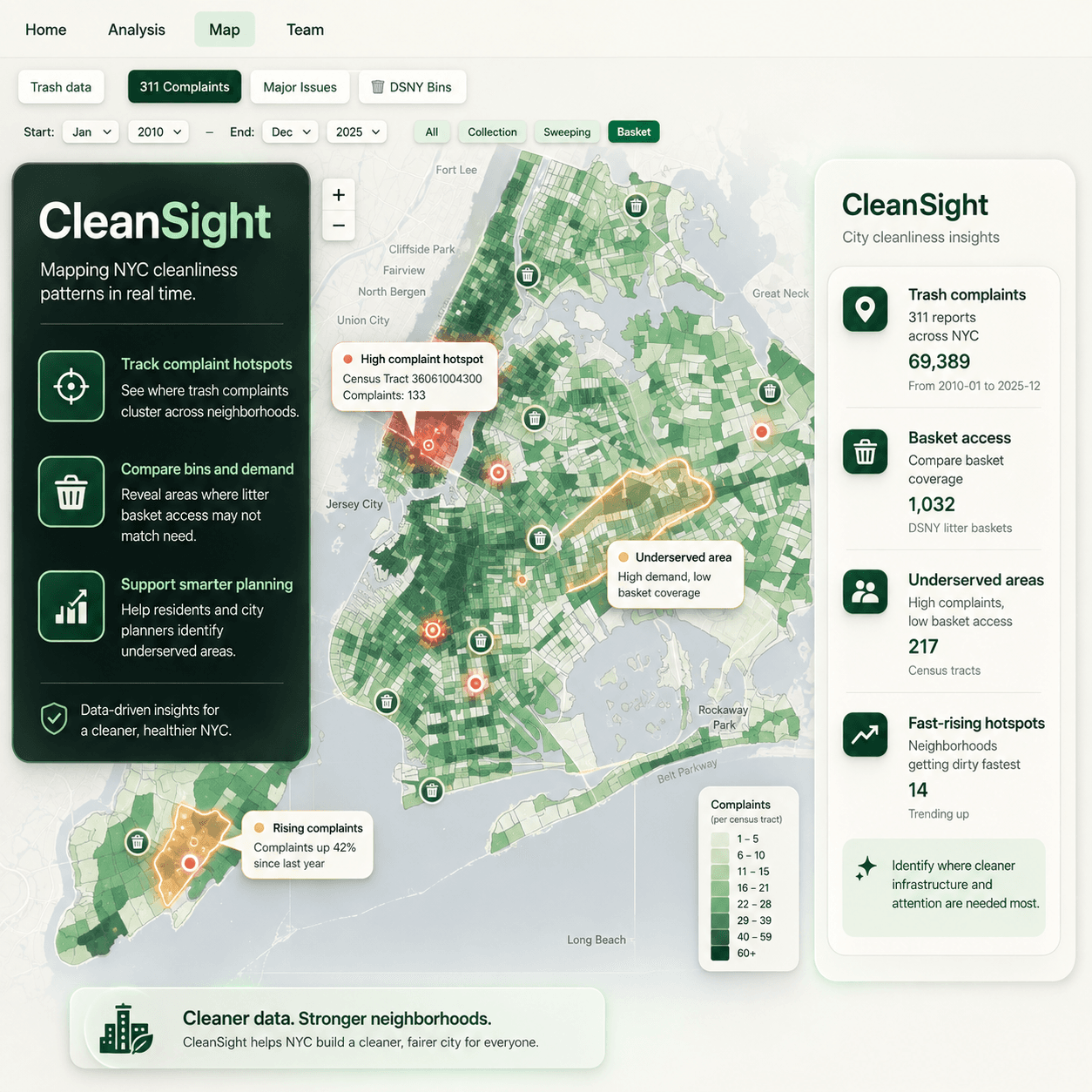
NYC cleanliness data is spread across multiple public datasets, making it difficult to compare sanitation issues.
An interactive geospatial dashboard that analyzes more than 1.7 million NYC 311 sanitation reports alongside DSNY waste tonnage, litter basket locations, and population. Users can explore complaint density, recurring cleanliness issues, seasonal trends, and sanitation infrastructure across neighborhoods.
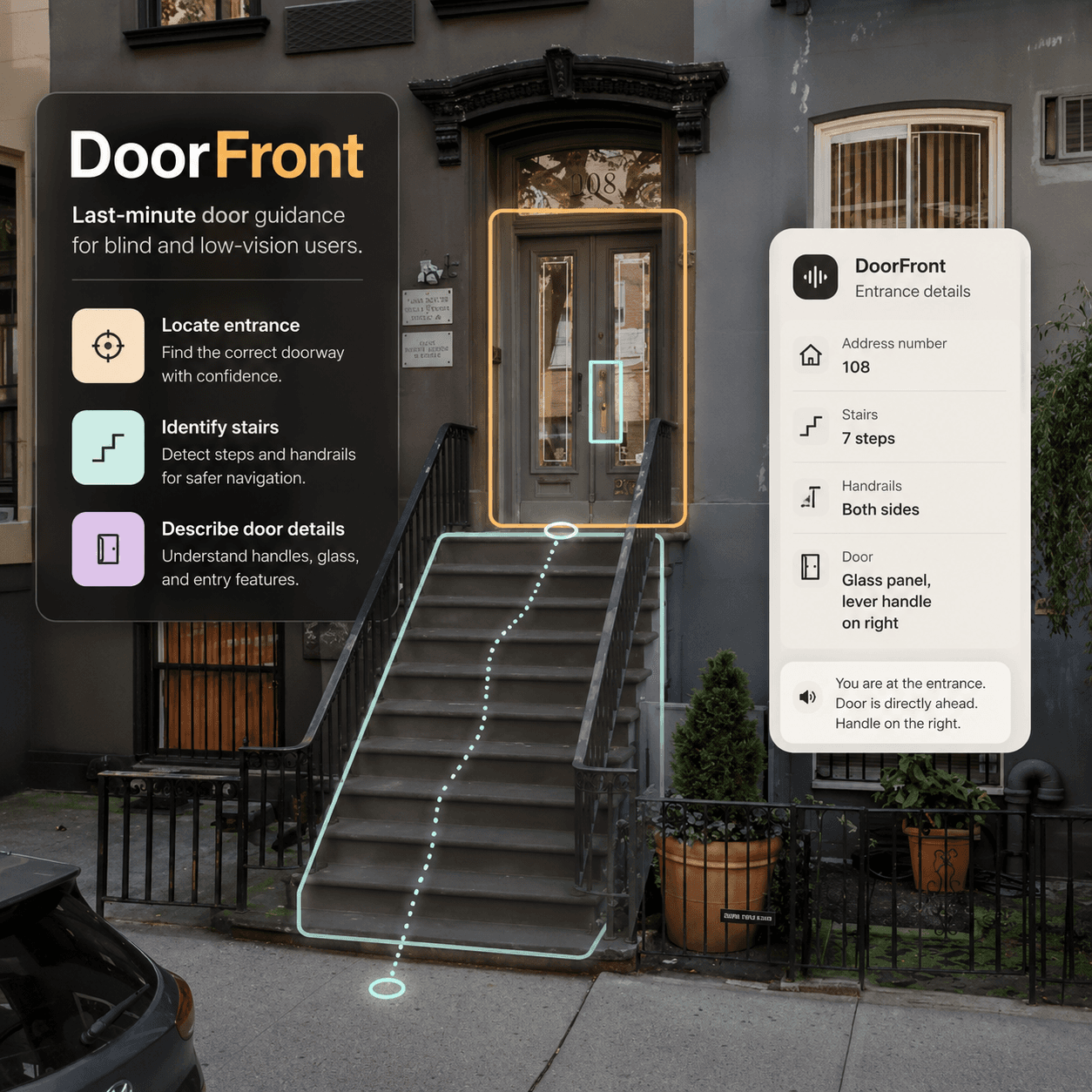
Blind and low-vision users often need reliable, last-minute guidance to identify and navigate unfamiliar building entrances.
Improved its geospatial and automated image-collection pipelines, developed an administrative analytics dashboard with an annotation review and quality-control system.
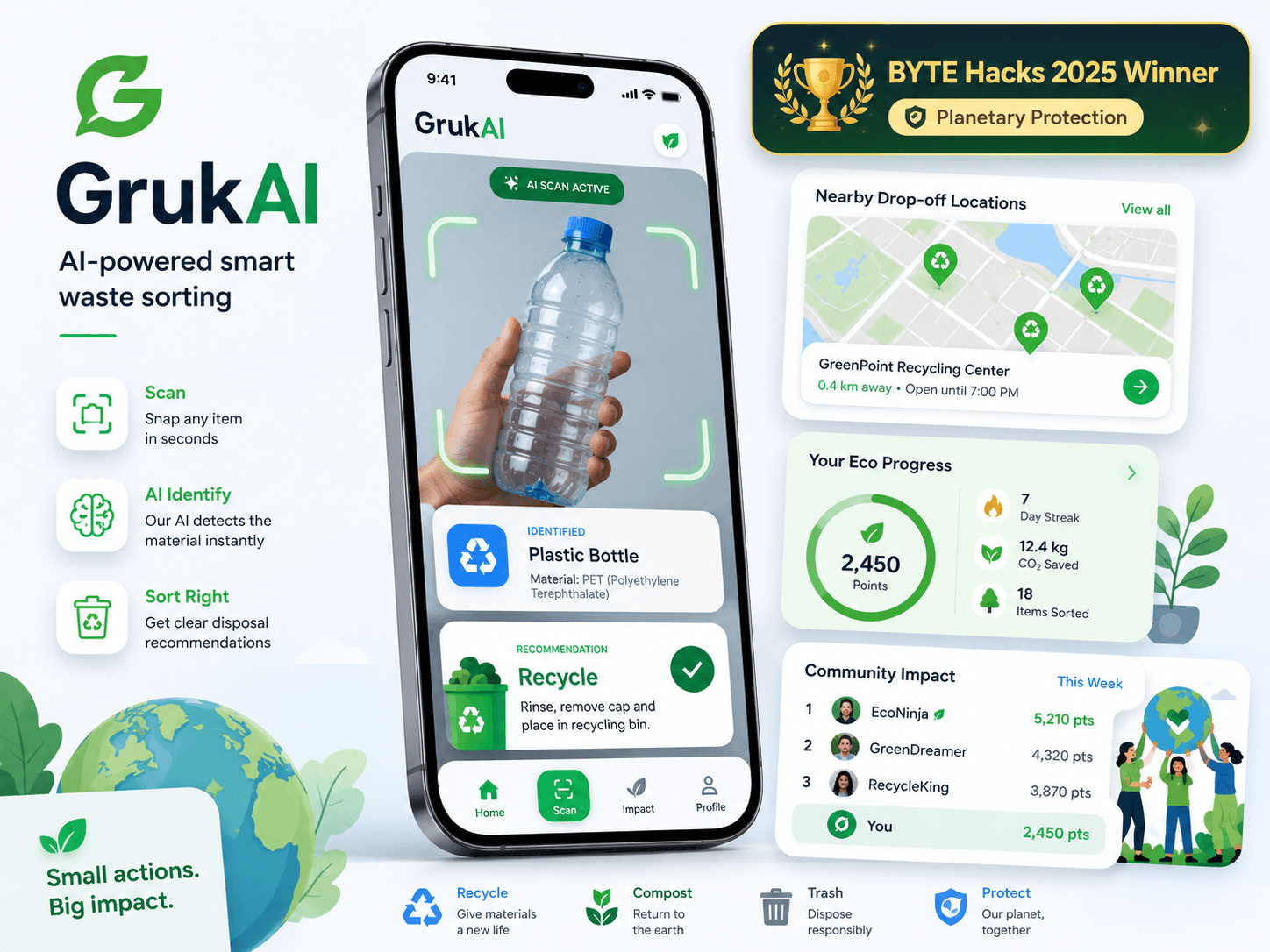
People often struggle to identify how everyday waste should be disposed of, leading recyclable or compostable materials to end up in landfills.
Built a mobile-first AI platform that scans waste, identifies its material, recommends the correct disposal method, maps nearby recycling facilities, and encourages sustainable habits.
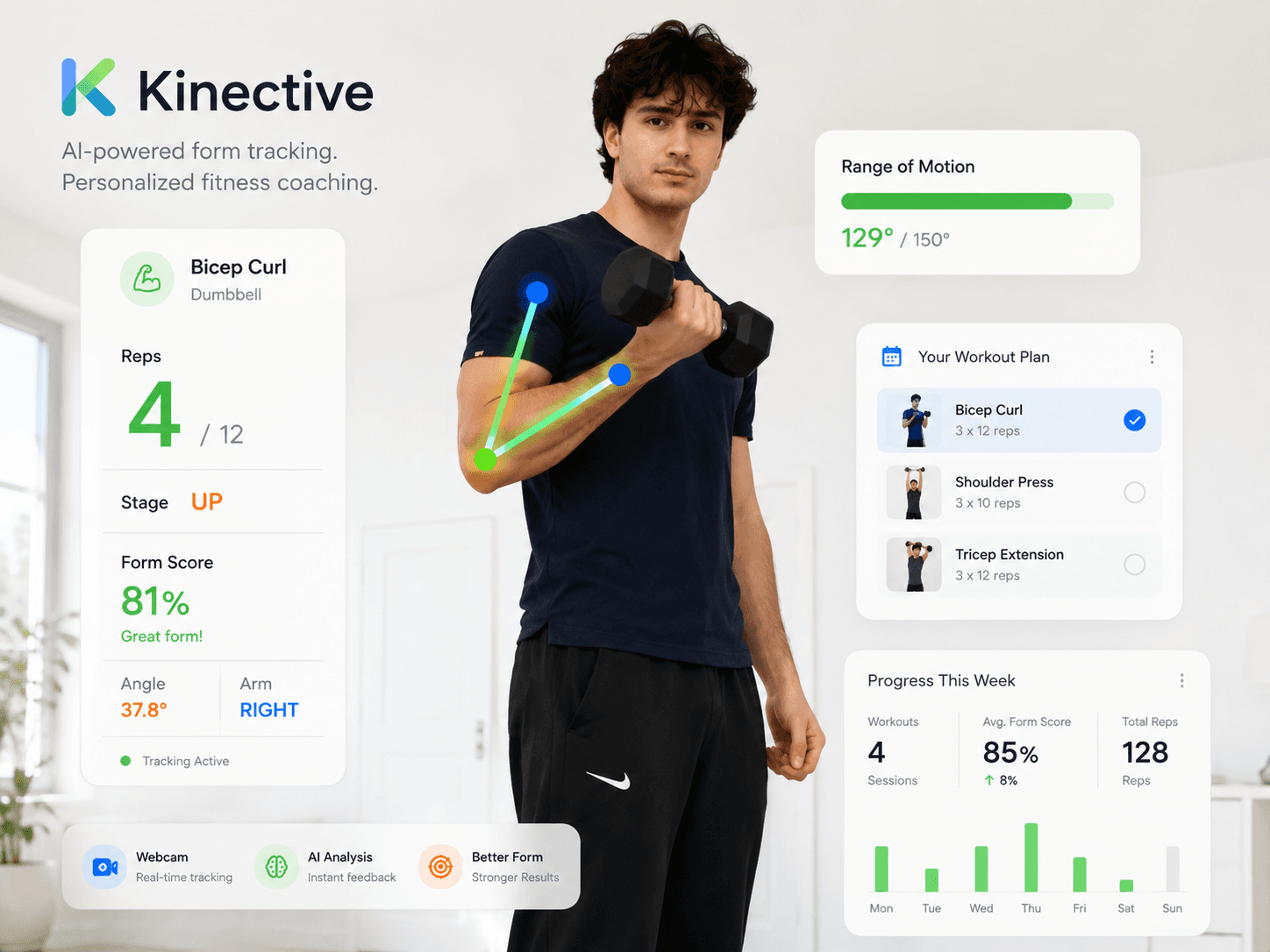
AI-powered fitness platform that generates personalized workout plans.
It analyzes body movements through webcam-based pose estimation, counts repetitions, provides real-time form feedback, and curates training videos based on each user's goals.
Experience
Engineering, research, teaching, and design.

2026
Software Engineering Intern
New York, NY
Worked with a professional engineering team to identify workflow problems, rapidly learn internal systems, and build practical tools that improved team processes.

2025-present
Research Assistant
New York, NY
Contributed to computer vision and accessibility-focused research, including model evaluation, data preparation, and experimental pipelines.
2024-2025
Supplemental Instruction Leader and Tutor
New York, NY
Supported computer science students through structured learning sessions, programming exercises, and individual guidance.

Before software engineering
Graphic Designer and Team Lead
Ukraine and New York
Developed visual communication, production, and project-management experience before transitioning into software engineering and AI.
Education
MS in Data Science and Engineering
Machine learning, computer vision, data systems, and AI research.
Associate degree coursework in Computer Science
Programming, algorithms, databases, web development, and systems.
B.S./M.S. Multimedia Technology and Engineering
An engineering and multimedia technology foundation that contributes to Diana's combination of visual design, technology, and human-centered problem solving.
Beyond Work
Open to research collaboration, AI and computer vision opportunities, academic networking, and software engineering roles.